
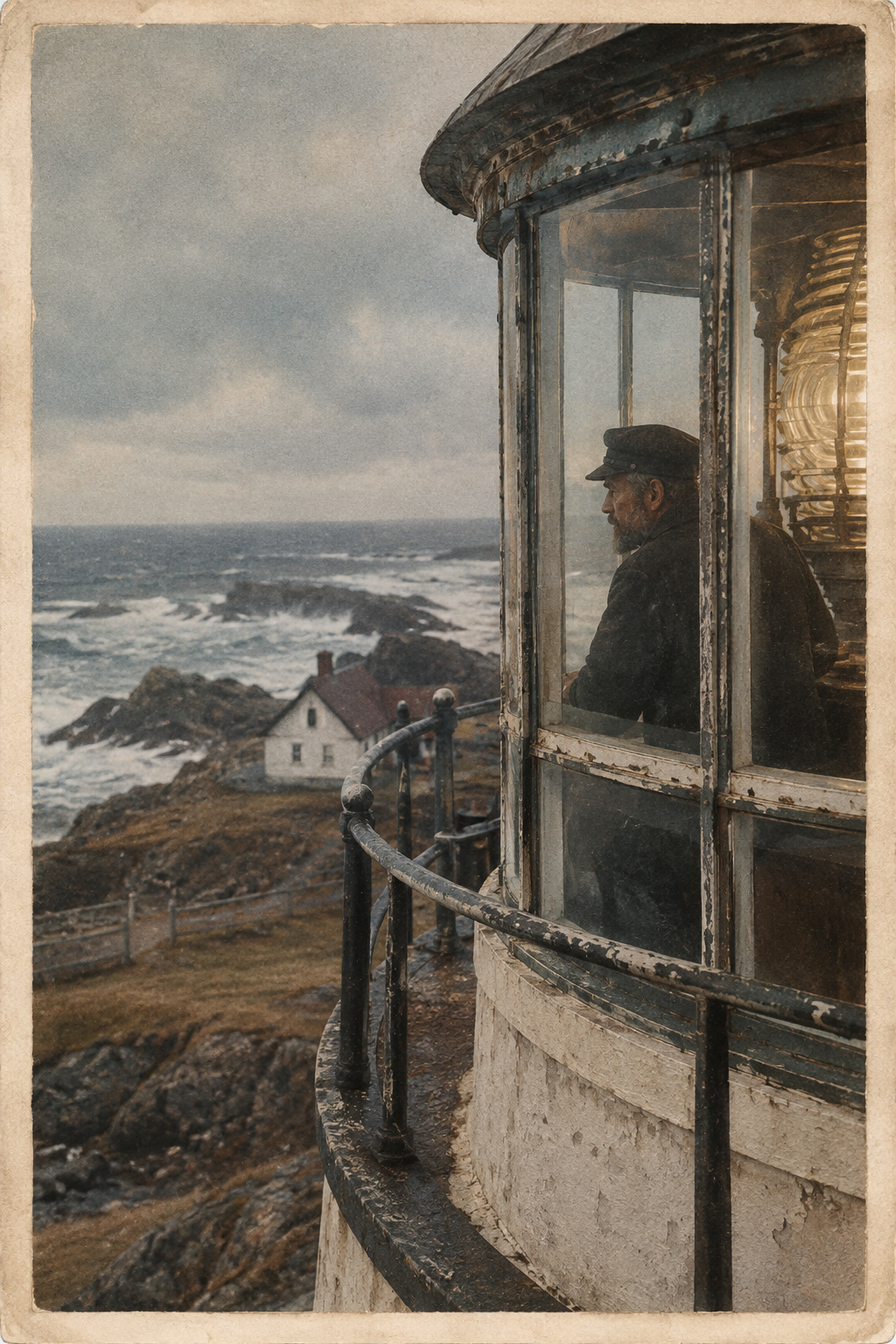
Elias Ward
Outer Head Light
Keeper account, early twentieth century
The fog bell set the rhythm of the night. Between signals, the whole station seemed to listen with us.
— Elias Ward, Outer Head Light
Related archival photographs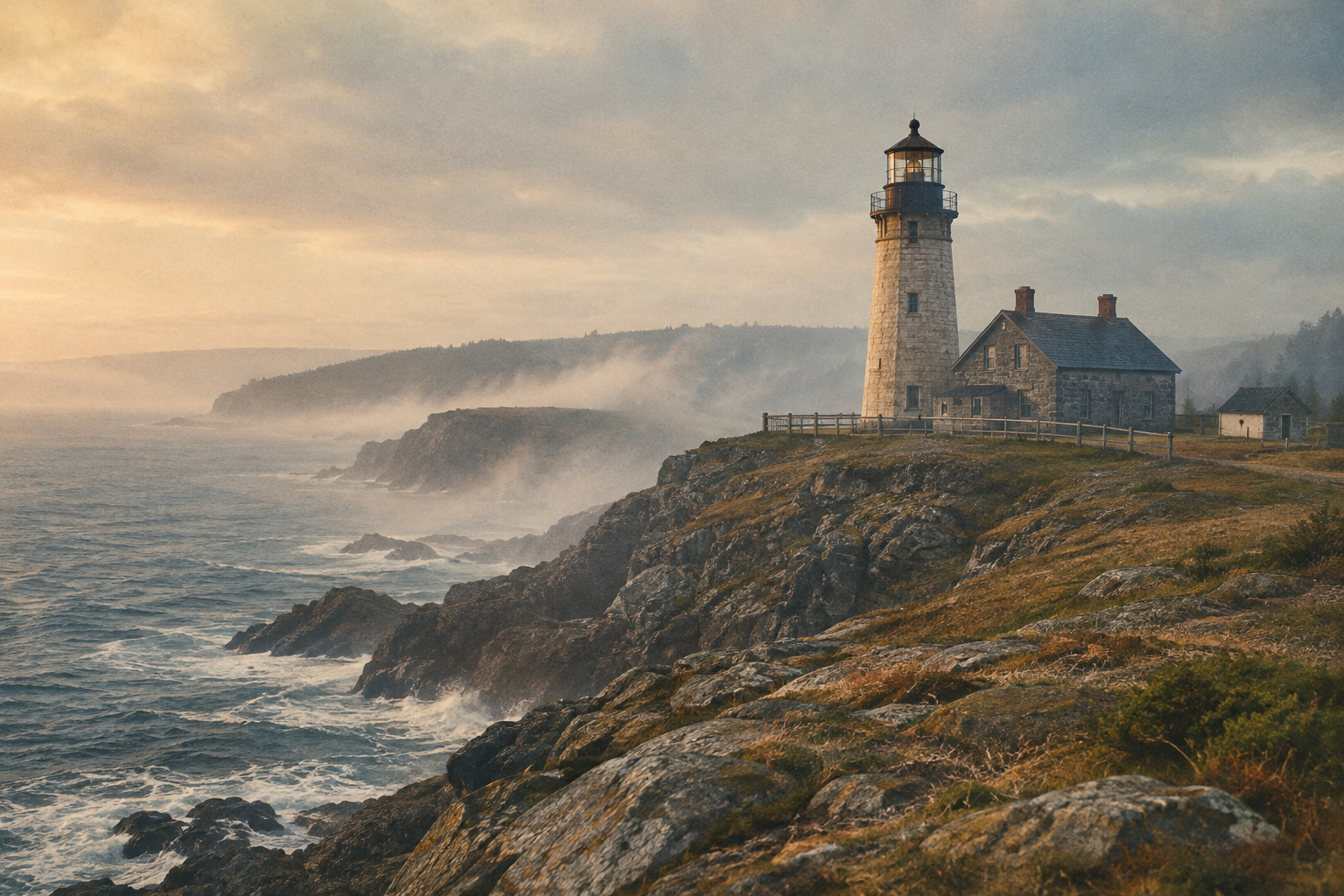
Archive Plate No. 03 · Northern Headland
Explore archival photographs, keeper accounts, and records of preserved towers along the northern coast in one continuous historical reference.
Chronological context
This sequence presents broad periods and verified shifts in lighthouse practice before individual keeper stories. Dates remain intentionally general where records are partial.
Early Signals
Before permanent towers
Coastal communities used elevated fires and simple daymarks to warn vessels away from reefs and shoals.
Masonry Era
Nineteenth century
Permanent towers, keeper dwellings, and service paths transformed exposed points into working light stations.
Lens and Lamp
Late nineteenth century
Improved optics and fuel systems gave each station a recognizable rhythm visible farther offshore.
War and Weather
Early twentieth century
Keepers maintained lights through severe storms, shortages, and changing coastal traffic.
Preservation
Modern era
Automation changed daily life while local groups turned surviving towers into landmarks, museums, and research sites.
Keeper Stories
These vignettes interpret the documented conditions of station life—night watches, weather exposure, family logistics, and duty cycles—so visitors can read the historical record as lived experience.
Outer Head Light
Keeper account, early twentieth century
The fog bell set the rhythm of the night. Between signals, the whole station seemed to listen with us.
— Elias Ward, Outer Head Light
Related archival photographs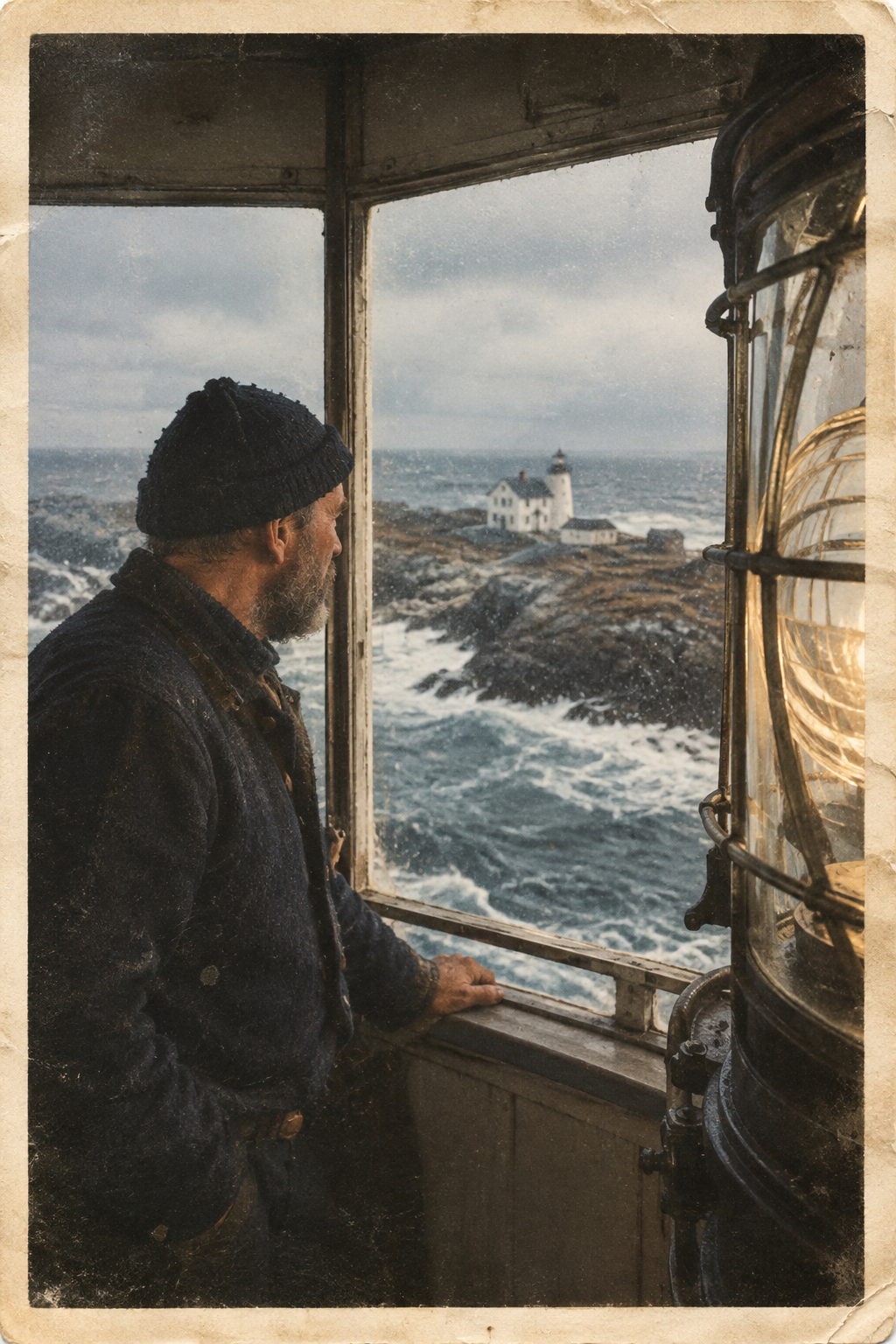
North Passage Light
Family recollection, interwar years
We measured winter by the supply boat and summer by the visitors who climbed the path to the lantern room.
— Mara Bell, North Passage Light
Related archival photographs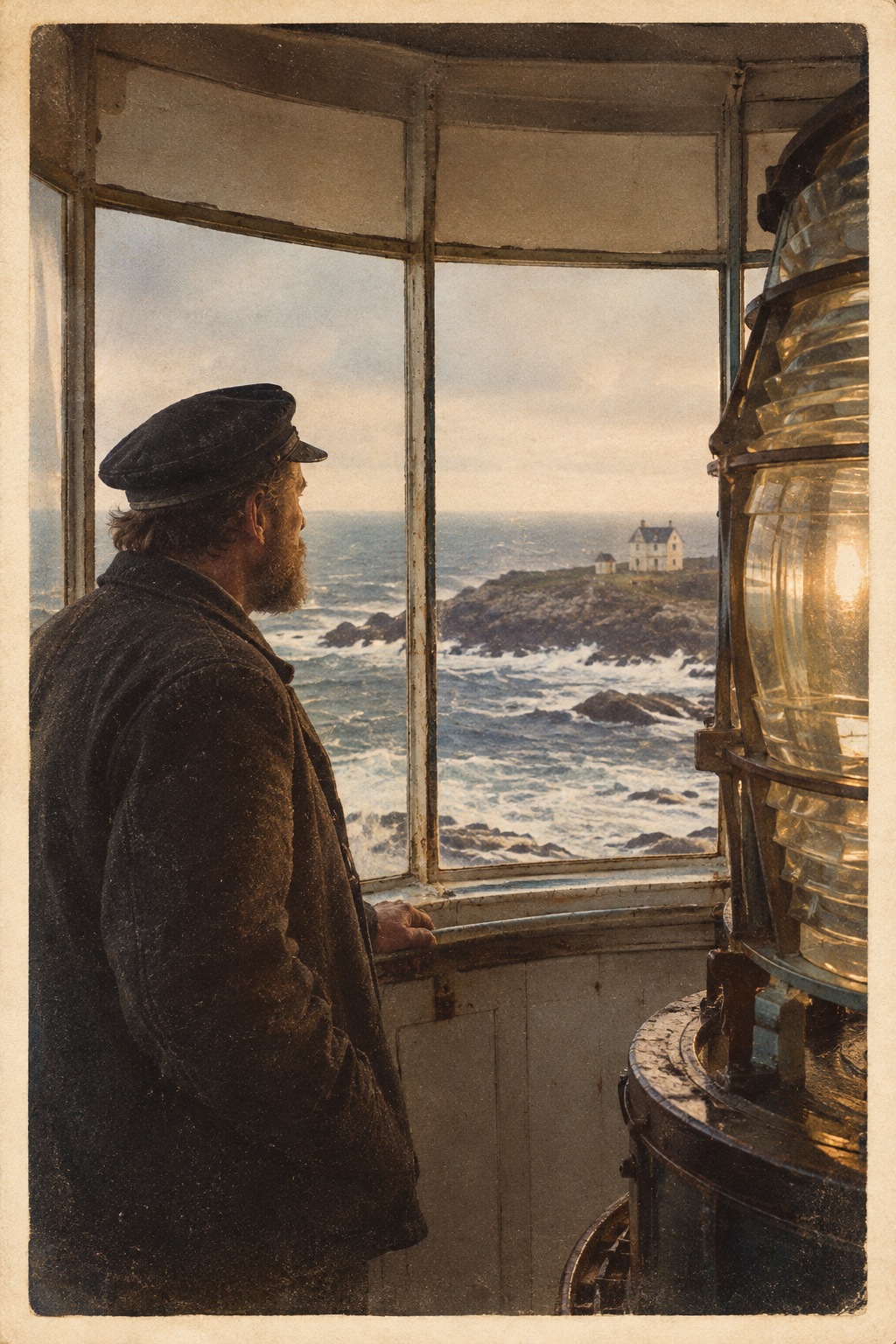
Grey Shoal Tower
Maintenance notebook recollection
Salt found every hinge. The work was repetition, but the beam had to turn as if the weather were calm.
— Thomas Reed, Grey Shoal Tower
Related archival photographsReference map
Illustrated orientation only. Marker placement is interpretive and does not indicate exact coordinates, safe passage, or navigation guidance.
Photo archive
Dates and identifications follow surviving notes and caption cards; some details remain interpretive rather than fully verified archive holdings.
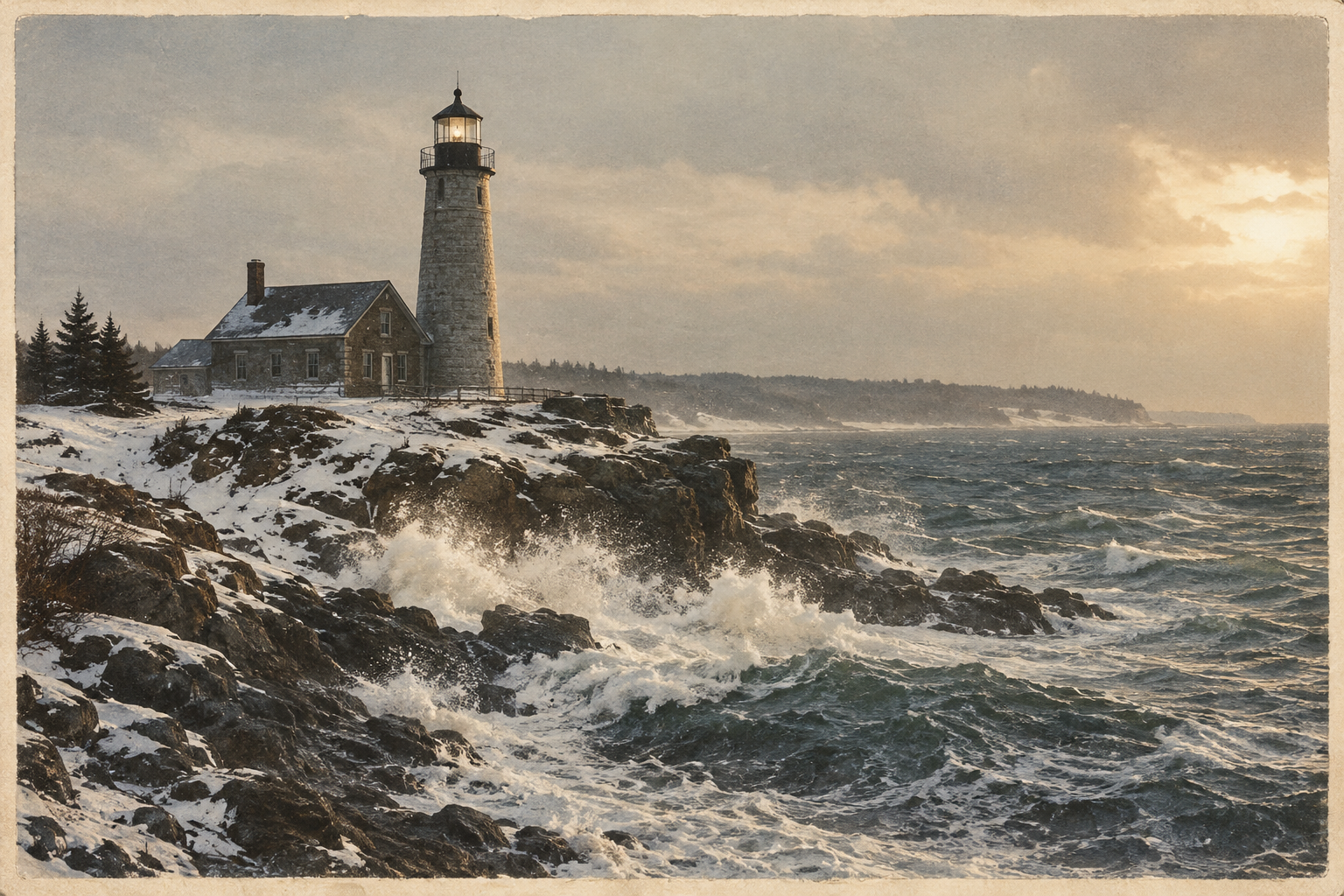
Undated archive-style study
A masonry tower stands beyond a low line of keeper buildings as winter surf breaks below.
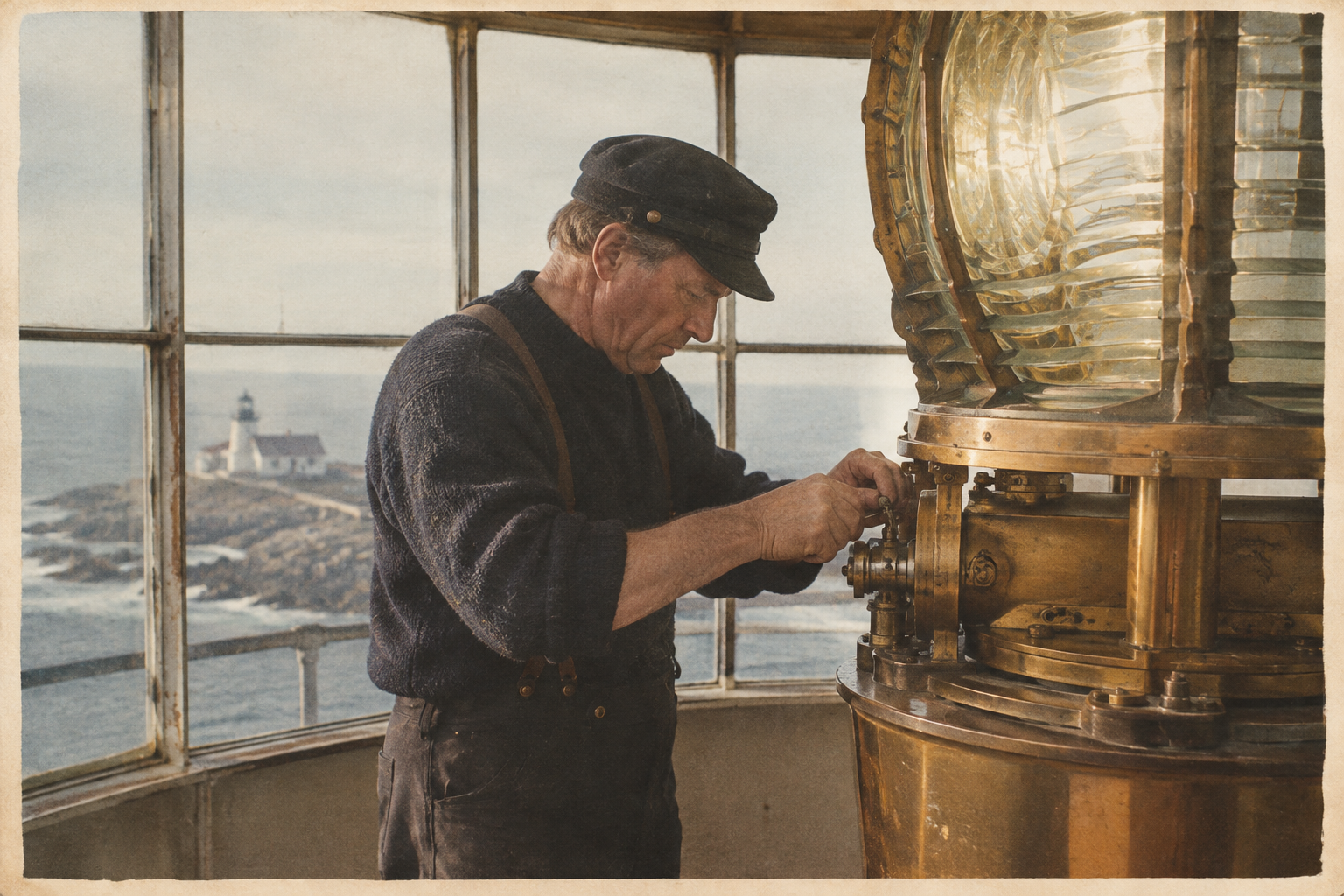
Early twentieth-century interpretation
Tools, polished fittings, and lens panels suggest the careful repetition behind a reliable beam.
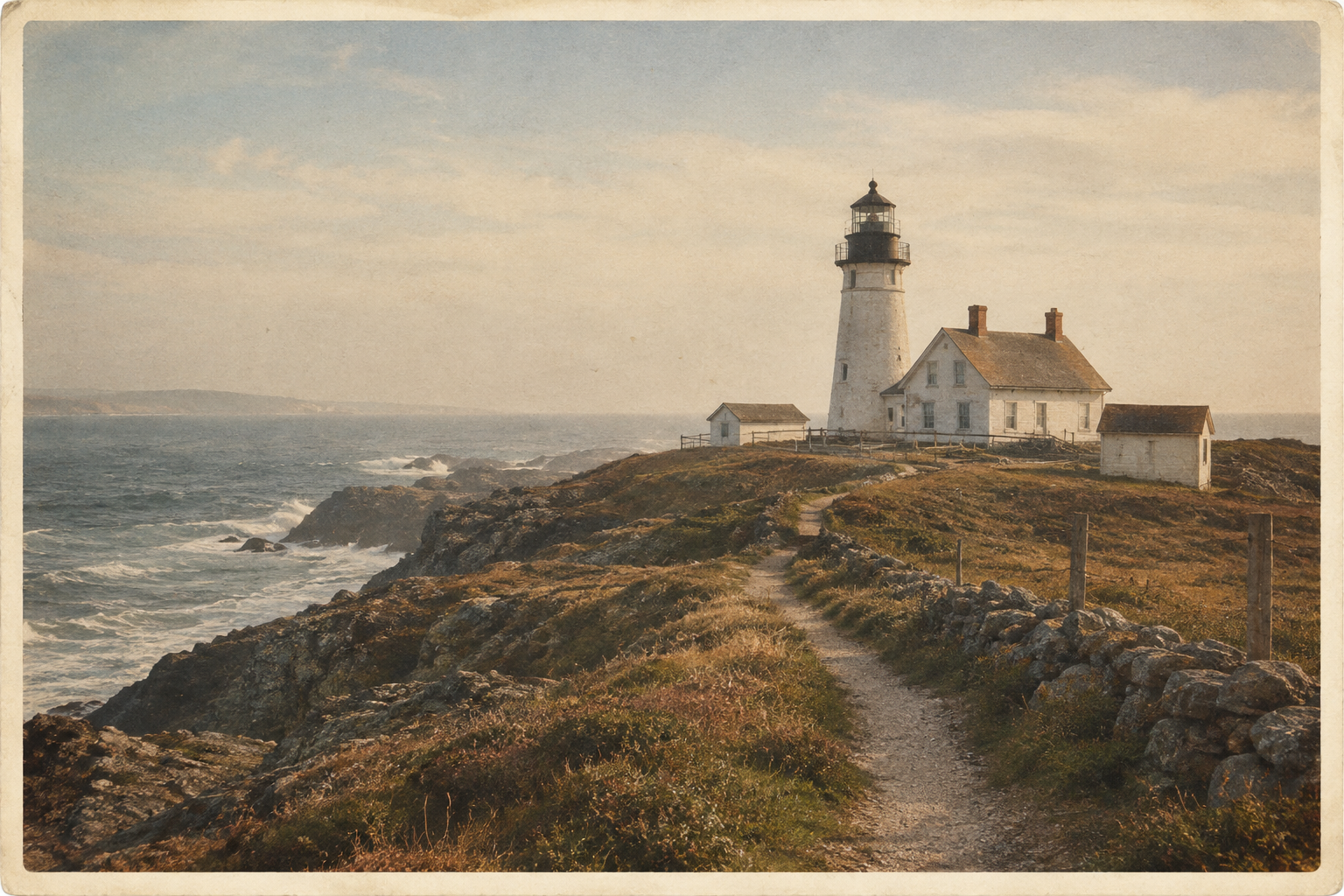
Interwar-era interpretation
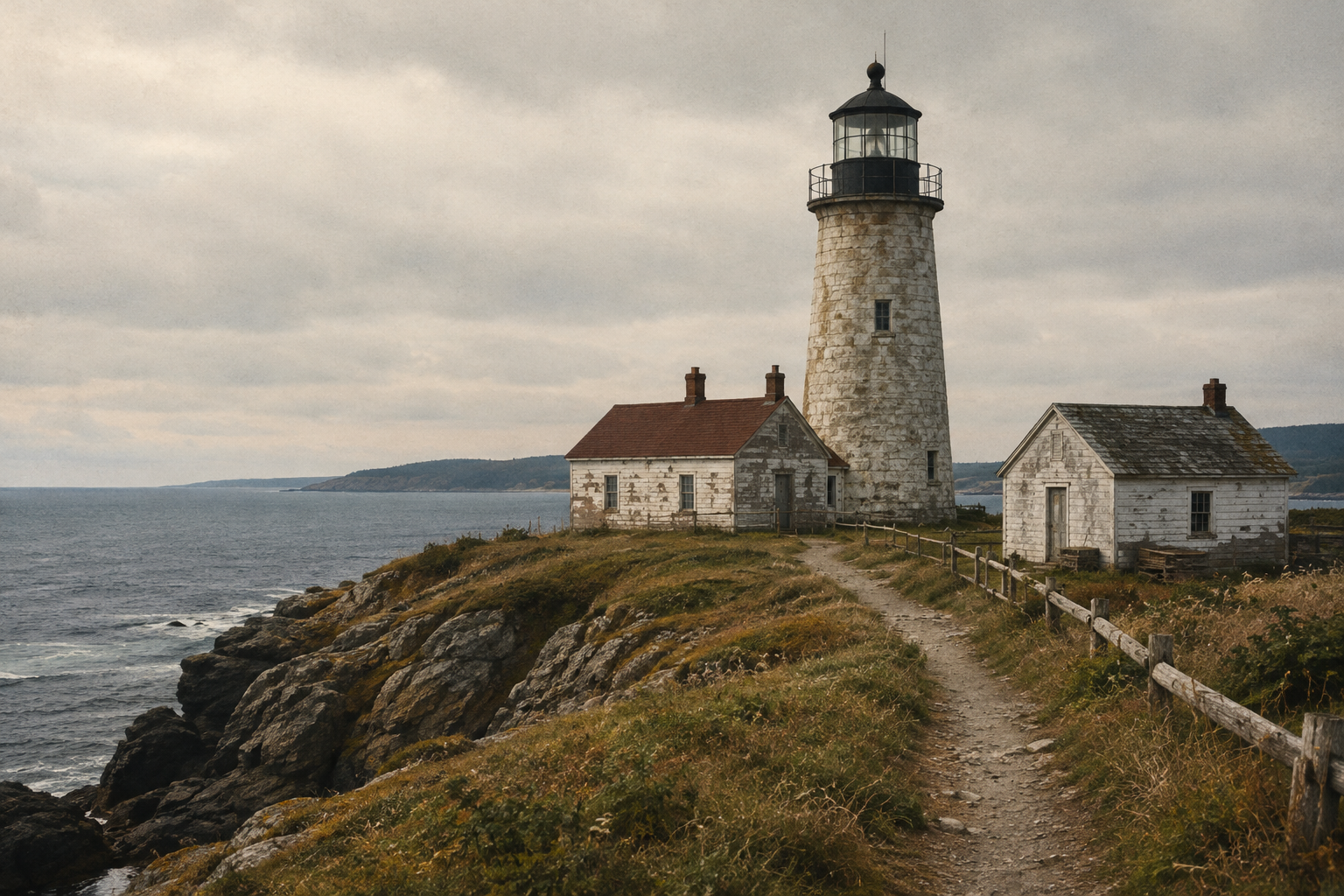
A narrow path links the landing to a remote lighthouse compound across wind-shaped grass.
Archive-style study
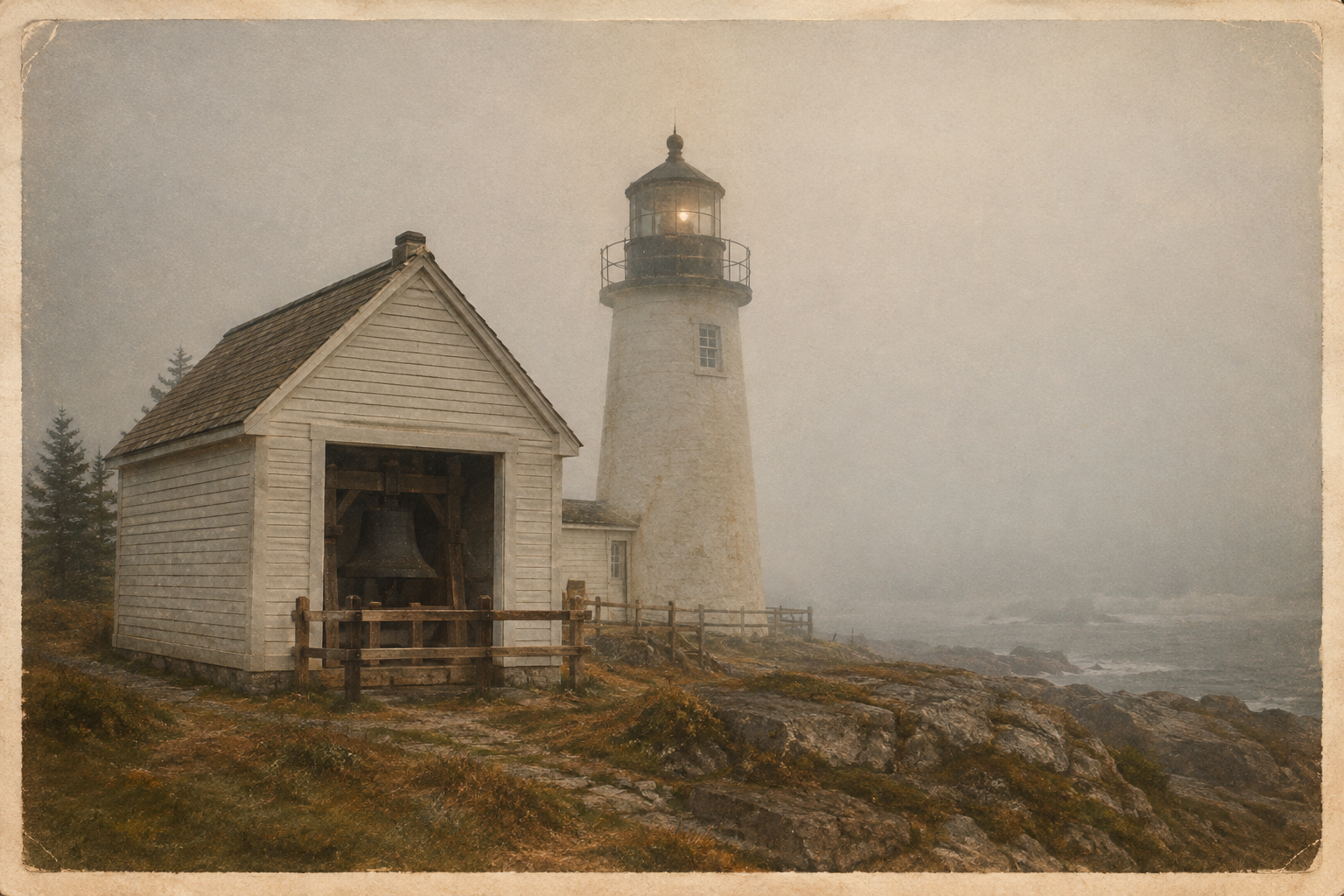
The bell house records another layer of coastal warning when fog erased the horizon.
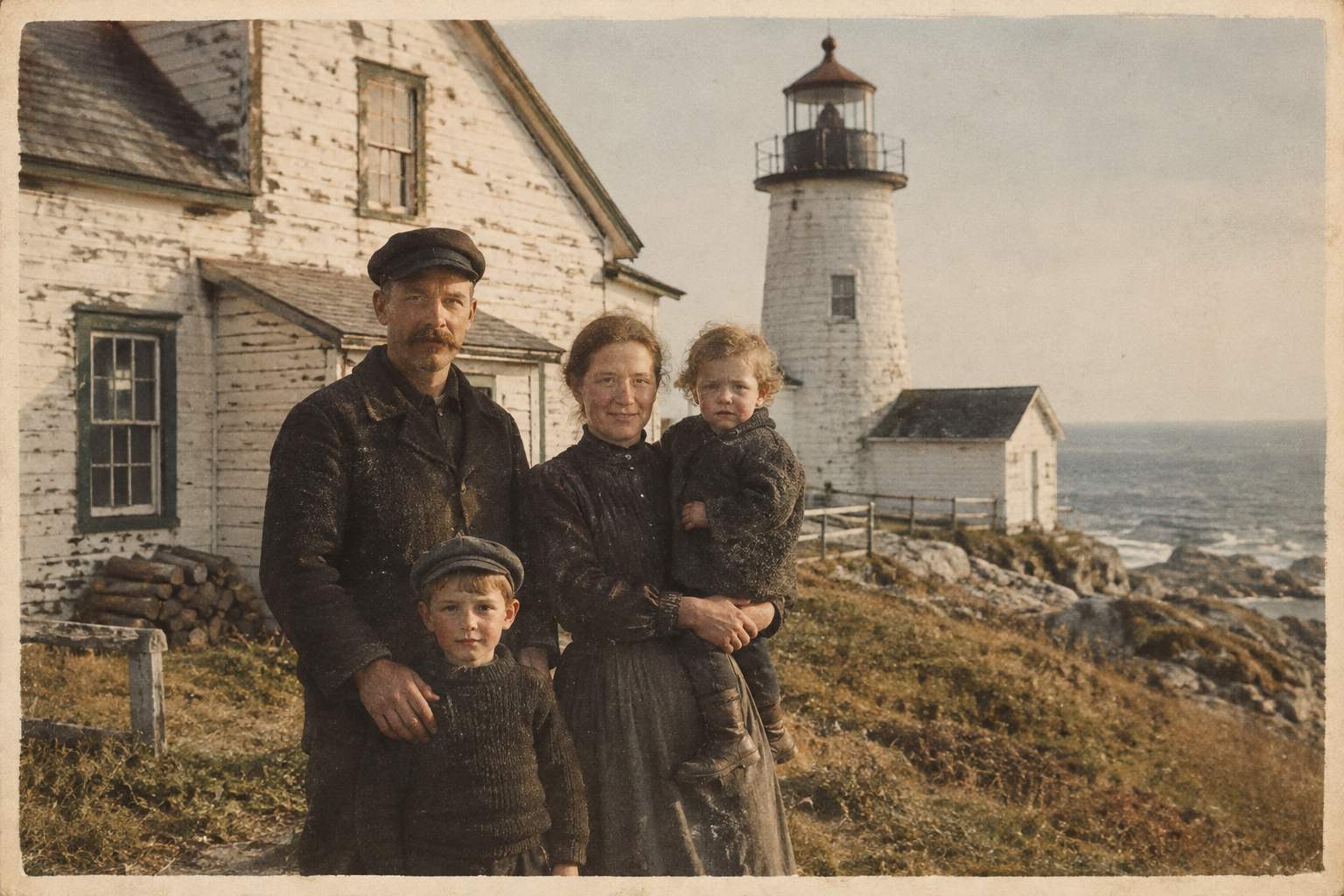
Family-life interpretation
Domestic life continued beside the tower, shaped by weather, schedules, and long intervals between boats.
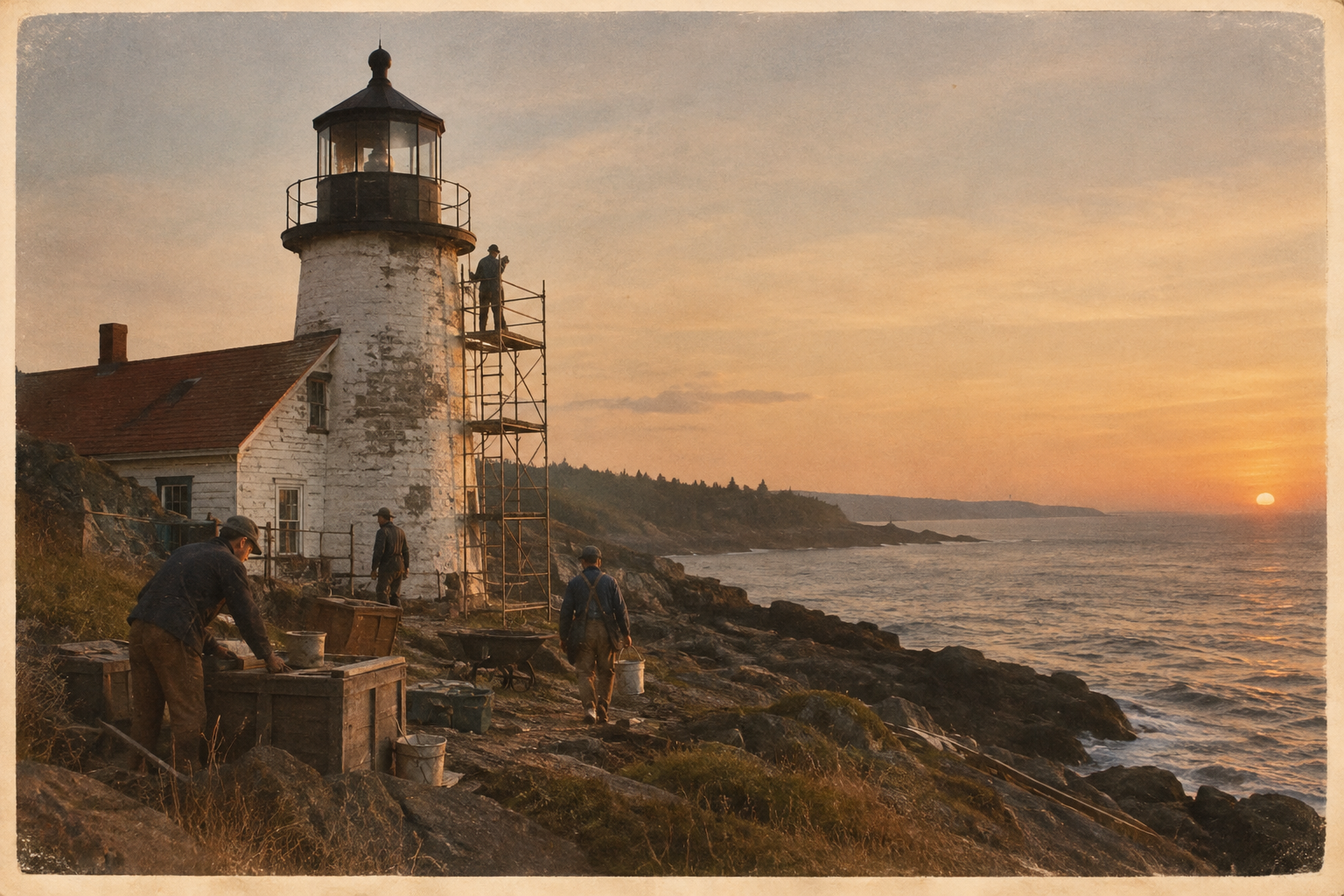
Contemporary heritage study
Scaffolding and careful masonry repair show how surviving towers are carried into another generation.